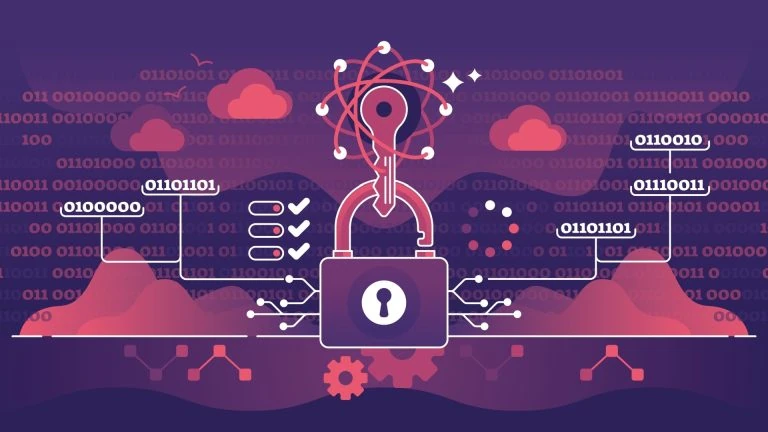
Quantum Key Distribution is revolutionizing IT security. The technology uses quantum mechanics for tap-proof communication. Juniper Research forecasts a market volume of 7.3 billion dollars by 2030.
Quantum computers will fundamentally change the way we look at humanity's most complex problems. They promise new insights, from materials science to medicine and climate research. However, this future technology is also challenging established standards in cyber security.
Confidential patient data, bank details and highly sensitive government and military information must be increasingly protected against eavesdropping and hacking. The necessary basis for this is provided by quantum physics, which goes far beyond conventional mathematical techniques for encryption.
Data protection has a bad image in many companies. However, it is worth reflecting on the topic once again. In practice, it often helps to strengthen companies.
Comprehensive and correct classification is fundamental for data security. Only if you know which data is (particularly) worth protecting can you implement appropriate measures. This is all the more important in times of AI assistants such as Microsoft Copilot.
Two new EU regulations are currently keeping companies busy: the Digital Operational Resilience Act (DORA), which came into force in January 2024 and regulates the areas of cyber security, IT risks and resilience in the financial sector, and the Artificial Intelligence Act (AI Act), which was passed in March.
The field of "information security" is currently dealing with a new technical term - "NIS 2.0". Interested experts are realizing that the new EU Network and Information Systems Directive (NIS 2.0) is also being incorporated into national legislation.