

What are the differences between big data, business intelligence and business analytics and how do I move from a sea of data to added data value in the company? Data intelligence plays a central role here, as it bridges the gap between pure data collection and intelligent, automated value creation.
The transformation of traditional data analysis
Data intelligence: The next evolution in data analysis

The world of data analysis has changed dramatically in recent years. What once began as simple reporting has evolved into a complex ecosystem of intelligent analytics systems. Data intelligence represents the latest evolution in the handling of company data and goes far beyond traditional business intelligence (BI).
Data intelligence describes the ability to gain valuable insights from large amounts of data and use them intelligently. For example, a logistics company could use data intelligence to combine traffic patterns, weather conditions and historical delivery times to calculate optimal delivery routes in real time. The system continuously adapts and learns from each delivery to make future routes even more efficient.
Video: The evolution of data intelligence from „Tech in Asia“
Technological principles and their practical application
The technological basis represents a significant difference between the two concepts. Business intelligence traditionally uses structured databases and defined query languages. For example, a hotel chain might use a BI system to generate monthly reports on occupancy rates, average room rates and customer reviews. These reports follow a predefined schema and require human interpretation.
Data intelligence, on the other hand, relies on more modern technologies such as machine learning and artificial intelligence. The same hotel could use data intelligence to implement a system that analyzes booking patterns and automatically adjusts pricing. It could recognize that demand increases during certain weather conditions, public holidays or local events and increase room rates on its own. At the same time, it could generate personalized offers for regular guests based on their previous stay patterns.
The time horizon as a decisive differentiating feature
A fundamental difference lies in the temporal orientation of both approaches. Business intelligence typically looks back to draw conclusions from historical data. A retail company uses BI tools to determine which products were most profitable in the last quarter or which stores failed to meet sales targets. This retrospective analysis provides valuable insights, but requires additional interpretation to make forward-looking decisions.
Data intelligence, on the other hand, is inherently future-oriented. A manufacturing company could use data intelligence to predict machine failures before they occur. Instead of just reporting which machines have broken down in the past, the system analyzes operational data, vibrations and other sensor readings to identify patterns that indicate impending problems. Maintenance work can then be carried out preventively before costly production interruptions occur.
Degree of autonomy and human interaction
The degree of automation differs significantly between the two concepts. Business intelligence mainly serves as a support tool for human decision-makers. A marketing department uses BI dashboards to analyze campaign results and plan future campaigns on this basis. Humans, however, make the final decision based on the data presented.
Data intelligence, on the other hand, can act independently. An online advertising platform could implement a data intelligence system that not only analyzes the performance of different ads, but also automatically redistributes the advertising budget to the most effective channels. It could independently initiate A/B tests to test new ad variants and continuously refine the targeting. The system makes operational decisions autonomously and only informs human managers about key strategic issues or unusual patterns.
Data diversity and integration as a key factor
The type and variety of data processed is another significant difference. Business intelligence focuses predominantly on internal, structured company data. A bank might use BI tools to analyze transaction data, account balances and customer profiles to generate reports on customer profitability or product usage.
Data intelligence, on the other hand, effortlessly integrates a wide variety of data sources and formats. The same bank could also use data intelligence to incorporate external data such as economic indicators, social media sentiment, news feeds and even location data from customers‘ cell phones. Through this comprehensive data integration, it could, for example, recognize that customers who read certain financial blogs are more likely to be interested in investment products and personalize offers accordingly.
Learning ability and adaptivity in practice
A key strength of data intelligence lies in its ability to learn continuously. While business intelligence systems create static reports according to predefined rules, data intelligence systems are constantly evolving. An e-commerce company with data intelligence could implement a recommendation system that not only learns from purchase histories, but also takes into account browsing behavior, time spent on product pages, seasonal trends and even color preferences. With each customer contact, the system refines its predictions and automatically adapts to new product categories or changing market conditions.
From data silos to networked knowledge
One aspect that is often overlooked is the different approach to data organization. Business intelligence traditionally operates in isolated data silos – separate systems for sales, finance, production and marketing analyze their data independently. An automotive manufacturer might maintain separate BI dashboards for production efficiency, sales figures and customer satisfaction, with the connections between these areas having to be made manually.
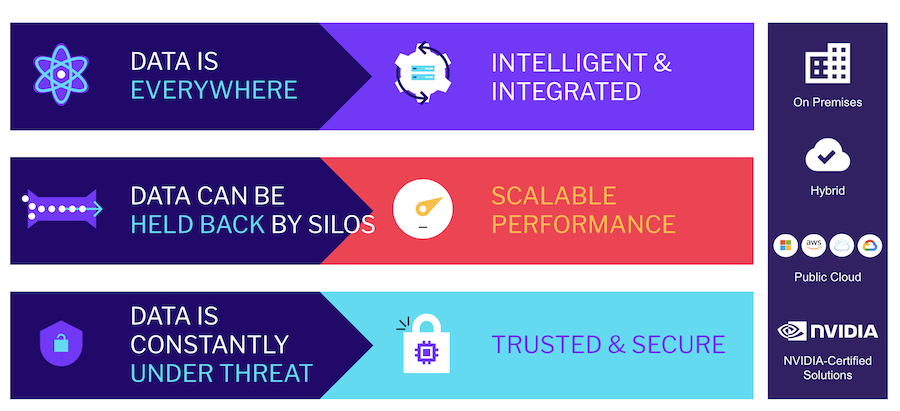
Data intelligence, on the other hand, breaks down these silos and creates a networked knowledge ecosystem. The same car manufacturer could use data intelligence to recognize how production parameters directly influence customer satisfaction. For example, the system could determine that vehicles produced on certain days of the week or at certain ambient temperatures require more frequent service appointments later on. These cross-departmental insights would be almost impossible to discover in traditional BI systems.
The future of data intelligence
The future of data intelligence will be shaped by several innovative trends that continue to expand its capabilities. Edge computing is already transforming the way data is processed – instead of analyzing everything in remote data centers, data processing is increasingly taking place at the point of origin. In autonomous vehicles, for example, decisions have to be made in milliseconds without waiting for data to be transferred to a central server. This decentralized intelligence enables completely new fields of application where speed is vital.
Another development is the ongoing democratization of data intelligence through low-code and no-code platforms. These enable employees without in-depth programming knowledge to carry out complex data analyses. For example, a sales employee could independently create customer segmentations or analyze sales trends without having to rely on the IT department. This spread of data skills leads to an organization-wide data culture in which decisions are made on the basis of data at all levels.
The symbiosis of data-driven intelligence
The convergence of data intelligence with other technologies such as the Internet of Things (IoT) and blockchain also opens up new opportunities. For example, a food company could install IoT sensors along the entire supply chain to continuously monitor temperature and humidity, while the blockchain ensures the integrity of this data. Data intelligence systems could then automatically raise the alarm in the event of deviations from optimal conditions or even make adjustments on their own.
Generative AI has a particularly transformative effect on data intelligence. Instead of just analyzing existing data, these systems can now generate original content. For example, a fashion company could feed its sales data into a generative AI system, which then suggests new design variants that match current customer preferences. This ability to not only analyze but also create opens up completely new dimensions of data usage.
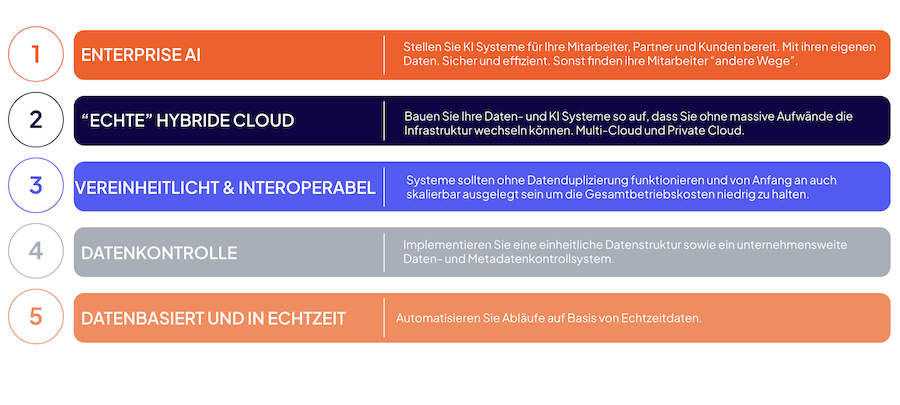
Data Operations
The emerging DataOps approach is also revolutionizing the organizational dimension of data intelligence. Similar to DevOps in software development, DataOps improves collaboration between data specialists, developers and specialist departments. A pharmaceutical company could use DataOps to drastically reduce the time from data collection in clinical trials to analysis and decision-making, thereby accelerating drug development.
These developments show that data intelligence is far more than just a technological trend – it represents a fundamental paradigm shift in the way organizations use data to create value and innovate. Companies that skillfully master this transformation will enjoy a decisive competitive advantage in the increasingly data-driven economy.
Business value creation in direct comparison
Consider a healthcare company: With business intelligence, it would generate quarterly reports that break down patient numbers, average treatment costs and common diagnoses by location. These reports help management allocate resources and make budgetary decisions.
With data intelligence, the same company could develop a system that combines patient data, genetic information, lifestyle characteristics and treatment outcomes to create personalized treatment plans. For example, it could predict which patients are at an increased risk of relapse and offer additional preventative care. The system could also identify patterns in drug efficacy in different patient groups and provide doctors with optimized treatment suggestions in real time.
The added value of data intelligence therefore lies not only in efficient data analysis, but also in its ability to enable intelligent, automated and personalized decisions that can be integrated directly into business processes.
Ethical dimensions and trustworthiness
As data usage increases, ethical aspects become more important. Business intelligence has an advantage in terms of traceability thanks to its transparent, rule-based analyses. For example, a financial services provider can clearly show how certain key figures have been calculated and which data points have been included in the analysis. This transparency creates trust among stakeholders and supervisory authorities.
Data intelligence faces major challenges here. The complex algorithms, especially neural networks, often function as a „black box“ whose decision-making processes are difficult to understand. An insurance company that uses data intelligence for risk assessment must ensure that no unintentional discrimination occurs and that the basis for decision-making can be explained. Modern data intelligence systems are therefore increasingly integrating explainability components that make algorithmic decisions transparent.
Future prospects for data-based decision-making
The boundaries between business intelligence and data intelligence are becoming increasingly blurred as traditional BI providers expand their platforms to include AI functions. Nevertheless, the conceptual difference remains: Business intelligence helps people make better decisions, while data intelligence increasingly makes and implements decisions itself.
What the future holds
In the future, companies are likely to pursue hybrid approaches – with automated decision-making through data intelligence for operational processes and human-driven strategic decision-making supported by business intelligence. The most successful organizations will be those that intelligently combine both approaches, blending human intuition with machine precision and scalability.
The future belongs to an integrated data strategy in which data intelligence ensures operational excellence, while business intelligence supports strategic decisions. Companies that master this interplay will enjoy a decisive competitive advantage in the data-driven economy and be able to make well-founded decisions based on a deep understanding of their data.
Q&A
What is the difference between big data, business intelligence, business analytics and data intelligence?
Big data, business intelligence and data intelligence are related but different concepts in data management. Big data refers to very large, complex data volumes and the technologies and methods used to process them, which are characterized by high volume, high speed and great variety.
Business intelligence (BI), on the other hand, focuses on analyzing business data to support decision-making processes. BI works primarily retrospectively with structured company data and uses tools such as dashboards and reporting to optimize business processes.
Business analytics goes one step further than traditional BI and uses statistical and quantitative methods to carry out in-depth data analyses. It encompasses a broader range of analytics, from descriptive to predictive to prescriptive analytics. Business analytics aims not only to understand what has happened, but also to predict what could happen and derive recommendations for action.
Data Intelligence is the most comprehensive approach that integrates and extends the other concepts. It combines big data, advanced analytics and AI/ML methods to leverage both structured and unstructured data for forward-looking insights. Data Intelligence focuses on data-driven innovation and strategic decision making by gaining deeper insights and recognizing complex patterns that traditional methods might miss.
The main difference lies in the focus and depth: Big Data concentrates on the technical infrastructure, Business Intelligence on operational business decisions through reporting, Business Analytics on advanced analytical methods for predictions, and Data Intelligence on the comprehensive integration of all these elements for strategic innovation and in-depth insights.
What are the major challenges in data intelligence?
Data quality is fundamental, as inaccurate or incomplete data leads to incorrect analyses. Data integration requires the merging of heterogeneous data from different sources with different formats and structures. Data security and data protection are just as important as technical complexity, tool selection and the lack of experts.
Overcoming organizational silos requires a cross-divisional data strategy. Last but not least, the challenge remains of deriving and implementing measures that actually add value from data-driven findings – the often-cited „last mile“ of data intelligence.